
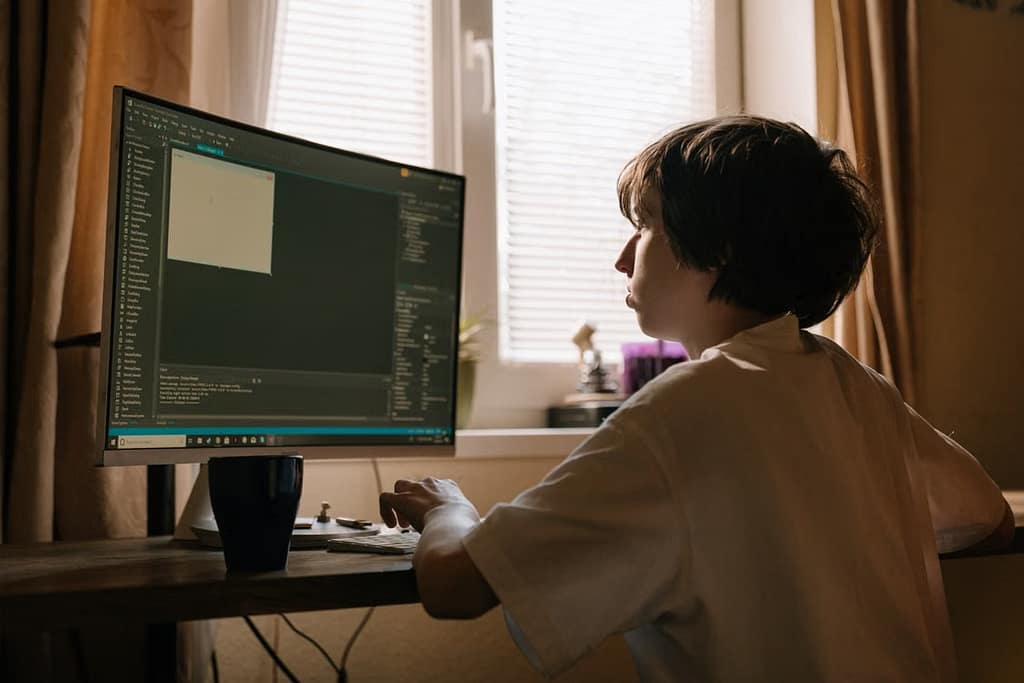
When many parents hear the word “coding”, they often picture rows of complex code, math equations and highly technical careers. However, coding today is about much more than becoming a software developer. Combined with artificial intelligence (AI) and digital creativity, coding is becoming a powerful way for young people to express ideas, solve problems and build confidence. It is helping children move from simply using technology to creating with it.
Coding is a Creative Skill
Creativity does not only happen with painbrushes or musical instruments. It also happens when a child designs a game, builds a website or creates an animation. Coding allows children to bring their imagination to life. A simple idea can become an interactive story, a mobile app or a game that others can enjoy. Through this process, children naturally develop valuable skills as they break larger challenges into manageable steps, experiment with different solutions, learn from mistakes and refine their work through testing. They are constantly combining logical thinking with imagination, showing that creativity and technical skills often go hand in hand.
Research from the University of York highlights that coding supports creativity by enabling learners to create websites, games, digital art, visualizations and many other forms of digital expression, while encouraging creative problem solving throughout the process (Subject Guides).
Digital Creativity Goes Beyond Screens
Technology is not just about writing code. Children can combine coding with music, animation, design, robotics and much more. They might create interactive artwork, visualise data in exciting ways or develop games that teach others something new. These experiences help children understand that technology is a creative toolkit that allows them to communicate ideas, tell stories and explore innovative solutions rather than simply consuming digital content.
AI Can Encourage Creativity
Artificial intelligence has quickly become part of everyday life. While many conversations focus on AI replacing creative work, there is another side that parents should know about. Used responsibly, AI can become a creative partner. It can help children generate ideas, explore different approaches, test concepts and reduce time spent on repetitive tasks, allowing them to focus on creativity and problem solving. The aim is not for AI to replace a child’s imagination but to support and enhance it while keeping human creativity at the centre.
One of the biggest advantages of modern AI tools is that children can learn through experimentation. Rather than simply reading about machine learning, they can train simple models using images, sounds, gestures or movements and immediately see how changing the data affects the results. This practical approach helps children understand that AI is not magic but a technology built on data and patterns. They begin to see that AI systems can make mistakes, require testing and improvement and ultimately rely on people to make thoughtful decisions about how they are used. Research from the Raspberry Pi Foundation suggests that interactive approaches to machine learning help learners build understanding through experimentation rather than memorisation, making AI both more accessible and more creative (Cheung, 2026).
Creativity Builds Confidence
Parents often focus on the technical skills children gain through coding. However, the confidence they develop may be even more valuable. When a child creates something from scratch, whether that is a website, a game or a piece of digital artwork, they experience the satisfaction of turning an idea into reality. They also learn that setbacks are simply part of the creative journey, encouraging resilience, curiosity and the confidence to tackle increasingly complex challenges.
Balancing Technology with Critical Thinking
As AI becomes more common, digital literacy is becoming just as important as digital skills. Children need to understand not only how to use AI tools but also how to question them. Encouraging conversations about where information comes from, whether AI responses are always accurate and how ideas could be improved helps children become thoughtful users of technology. These discussions build critical thinking skills that will remain valuable throughout their education and beyond.
Preparing children for Tomorrow
Technology will continue to evolve throughout your child’s lifetime. Programming languages may change. AI tools will become more advanced. New careers will emerge that do not exist yet. What will remain valuable are the human skills developed through coding and digital creativity: curiosity, communication, collaboration, resilience and creative problem solving.
At Web3sy, we are passionate about helping children build these skills through engaging, practical experiences that make technology exciting, accessible and meaningful. Coding is not simply about computers, it is about giving young people the confidence to create, innovate and shape the future.
Sources
Cheung, Manni, and Manni Cheung. “Can AI Support Creativity? What Educators Can Learn From Creative Machine Learning.” Raspberry Pi Foundation, 23 June 2026, www.raspberrypi.org/blog/can-ai-support-creativity-what-educators-can-learn-from-creative-machine-learning.
cottonbro studio. “Boy in White Long Sleeve Shirt Playing Computer Game · Free Stock Photo.” Pexels, 26 June 2020, www.pexels.com/photo/boy-in-white-long-sleeve-shirt-playing-computer-game-4709291.
Subject Guides: Digital Creativity: A Practical Guide: Creative Coding and Data. subjectguides.york.ac.uk/digital-creativity/coding.