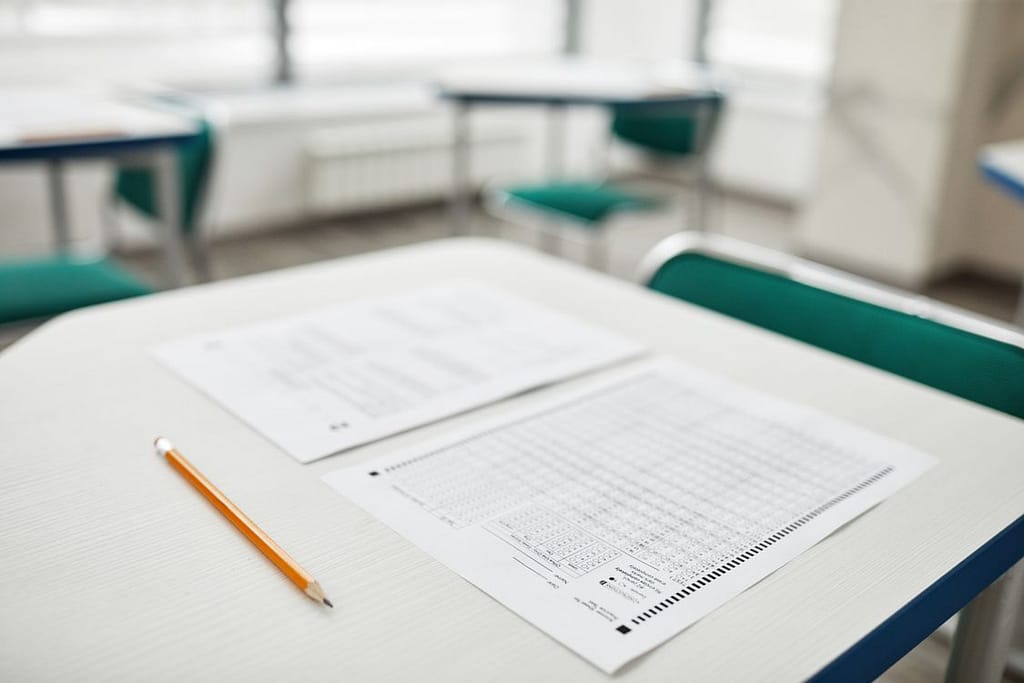
For years, education has revolved around one question: “Will this be on the exam?” As parents, we have all seen it happen. Children spend weeks memorizing facts, sitting tests, then forgetting much of what they learned a few weeks later. While good grades certainly open doors, they don’t automatically prepare children for the challenges they will face in university, work or everyday life. The world our children are growing up in is changing faster than ever. Success is no longer defined simply by how much information someone can remember, it is about how well they can think, solve problems, adapt, communicate and continue learning throughout their lives.
Exams Measure Knowledge, Life Demands Skills
Academic knowledge will always matter. Reading, writing, maths and science provide the foundation for learning. But knowledge is not enough. Today’s employers consistently value qualities like critical thinking, collaboration, creativity, resilience and communication alongside academic achievement. Likewise, children who can manage setbacks, work with others and solve unfamiliar problems are often better equipped to thrive beyond school.
Education should help young people become independent thinkers, resilient individuals and confident problem solvers while still achieving strong academic success. Rather than choosing between knowledge and skills, the two should work together (Nesta, Skills for Life: Preparing Young People for More Than Exams). For parents, this means asking a different question. Instead of “How many marks did my child get?” Perhaps we should also ask “What did they learn about thinking?”
Learning How to Learn
One of the most valuable abilities a child can develop is knowing how they learn best. Educational research describes this as metacognition, thinking about your own thinking. Children who reflect on what helps them understand, remember and solve problems become more independent learners rather than relying on constant instructions. Metacognitive strategies help learners evaluate and improve how they study and solve problems, making learning more effective over time. This is especially important because school eventually ends, but learning does not. Whether learning a new technology, changing careers or solving everyday problems, adults who know how to learn have a significant advantage.
Memory Is not About Cramming
Many people associate memory with endless repetition before exams. In reality, strong memory comes from understanding information, organising it well and reviewing it regularly. Research on effective learning strategies suggests that people remember information better when they actively organize ideas into meaningful structures, revisit them over time and engage with the material instead of simply rereading it. This means that effective learning is less about memorising hundreds of disconnected facts and more about helping children make meaningful connections. Parents can encourage this by asking questions such as “Can you explain this in your own words?” or “Why do you think this works?” and “How does this connect to something you already know?” These conversations strengthen understanding far more than simply checking whether homework is complete.
One of the biggest challenges facing today’s children is not intelligence, it is distraction. Phones, notifications and endless entertainment compete for attention every minute of the day. Concentration is not something children either have or do not have. Like reading or writing, it is a skill that develops through practice. Research shows that genuine interests, active participation and reducing distractions all improve concentration. Developing routines, taking notes, asking questions and actively engaging with learning help children stay focused for longer. Parents do not need to create perfect study environments. Often, simply encouraging short periods of focused learning without interruptions can make a significant difference.
The Skills That Last a Lifetime
The future is unlikely to reward people simply because they can remember information. Instead, success will increasingly depend on qualities that cannot easily be automated such as critical thinking, communication, creativity, collaboration, problem solving and much more. These skills do not replace academic learning, they make academic learning more powerful.
As Nesta argues, schools should help young people leave education with both strong academic knowledge and the broader capabilities needed for work and life, recognising that the debate between “skills versus knowledge” is a false choice (Nesta, Skills for Life).
Parents play a huge role in developing these lifelong skills. Simple habits can have a lasting impact:
- Encourage curiosity instead of only praising correct answers
- Celebrate effort, persistence and problem solving
- Ask children to explain their thinking rather than recite facts
- Let them make mistakes and learn from them
- Create opportunities for teamwork, creativity and independent decision making
These experiences build confidence that extend well beyond the classroom
Exams will always have their place. They provide useful milestones and help assess academic progress. But they should not be the final goal. The real purpose of education is to prepare children for a life of learning, adapting and growing.
Sources
Barbour, Andy. “Test Paper and Pencil on a Desk · Free Stock Photo.” Pexels, 2 Feb. 2021, www.pexels.com/photo/test-paper-and-pencil-on-a-desk-6683393.
Effective Learning Skills (Concentration, Memory, and More). www.asa3.org/ASA/education/learn/203.htm.
Nesta. “Skills for Life: Preparing Young People for More Than Exams.” Nesta, www.nesta.org.uk/blog/skills-life-preparing-young-people-more-exams.